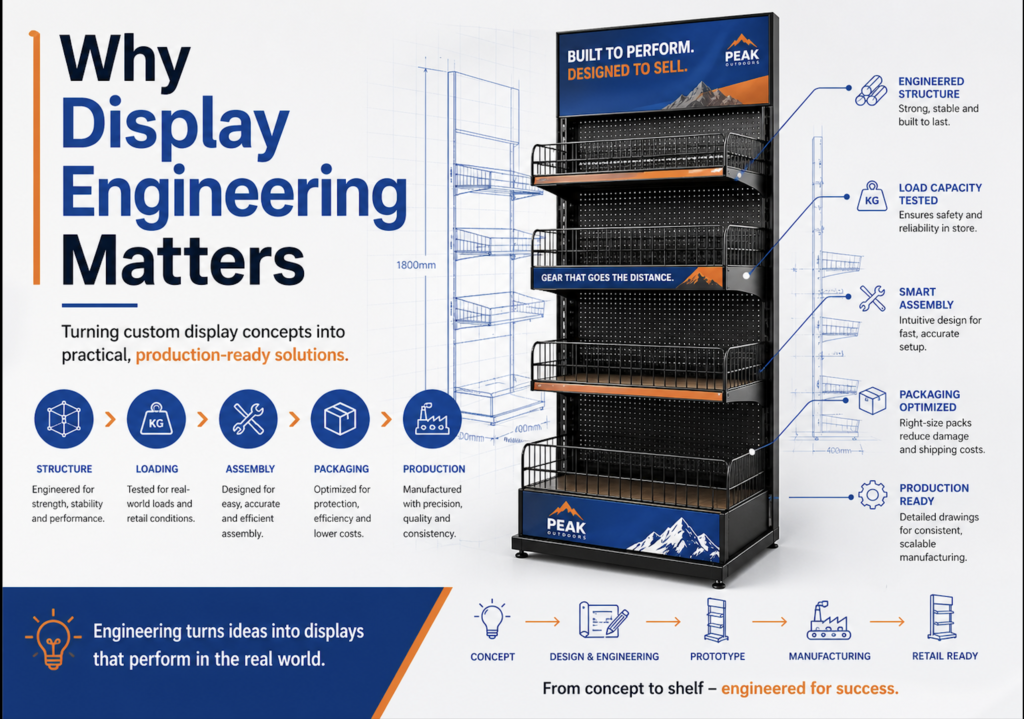
A retail display may start with a good idea.
It may even look great in a rendering.
But that does not automatically mean it is ready for production.
This is where display engineering becomes essential.
In custom display manufacturing, engineering turns a display concept into something that can actually be produced, packed, shipped, assembled, and used in a real retail environment.
A good display is not only about how it looks.
It also needs to work.
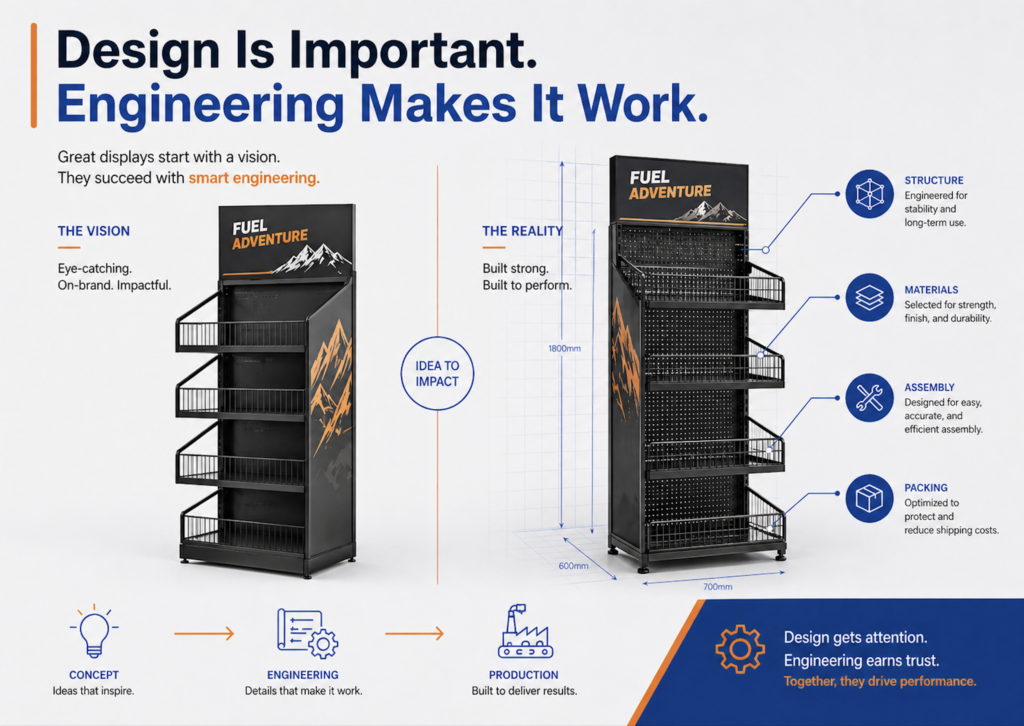
Design Is Important, But Engineering Makes It Work
Display design focuses on appearance, branding, and product presentation.
Engineering focuses on function, structure, feasibility, and production.
That includes:
- structural strength
- material thickness
- product loading
- assembly method
- production efficiency
- packaging direction
Without proper engineering, a display may look right on screen but fail in real retail use.
It may be too weak.
Too expensive to produce.
Too difficult to assemble.
Or too inefficient to ship.
That is why engineering review should happen before mass production begins.
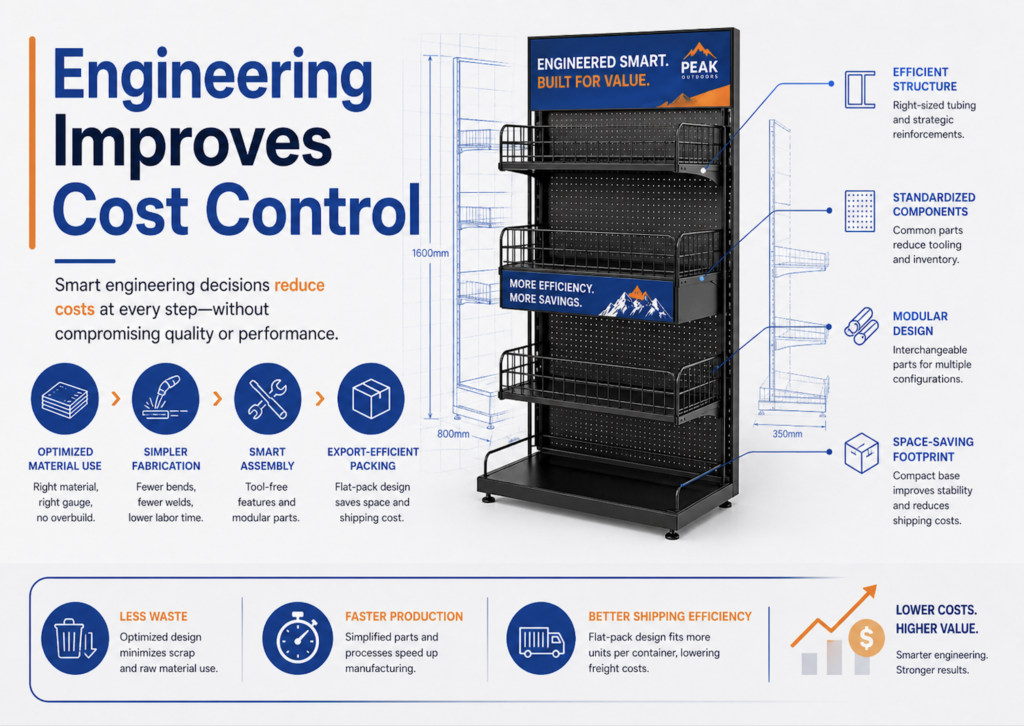
Engineering Improves Cost Control
A good engineering team does not only check whether the structure is strong enough.
It also helps improve the whole project efficiency.
For example, display engineering can help:
- reduce unnecessary material usage
- simplify production steps
- improve welding or assembly logic
- optimize material thickness
- make export packing more efficient
- reduce wasted space during shipment
- lower the total landed cost
This is especially important for metal display racks, wire displays, wood fixtures, and mixed-material retail display projects.
Sometimes a small engineering adjustment can make a big difference in cost, production speed, and shipping efficiency.
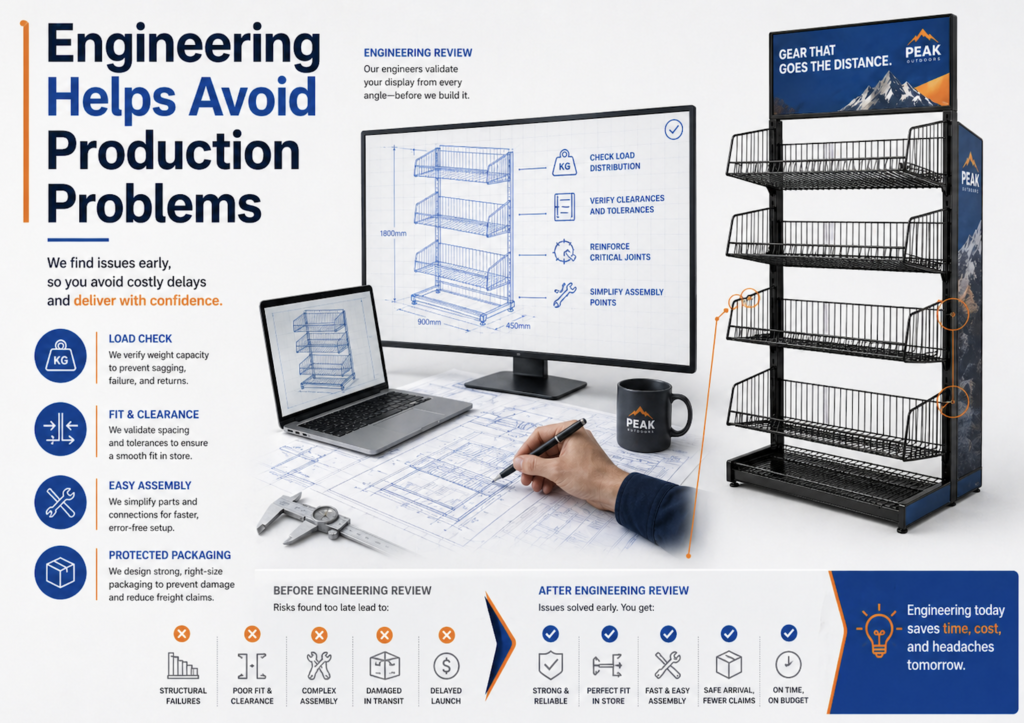
Engineering Helps Avoid Production Problems
Many custom display project issues happen because the concept was not fully reviewed before production.
For example:
- the shelves may not be strong enough
- the display may be difficult to assemble
- the product may not fit correctly
- the structure may be unstable
- the packaging may not protect the display well
- the design may be too expensive to manufacture at scale
Engineering helps detect these risks early.
That is one of the biggest values in custom display development.
It is much easier to solve a problem during engineering review than after materials have been prepared or mass production has started.
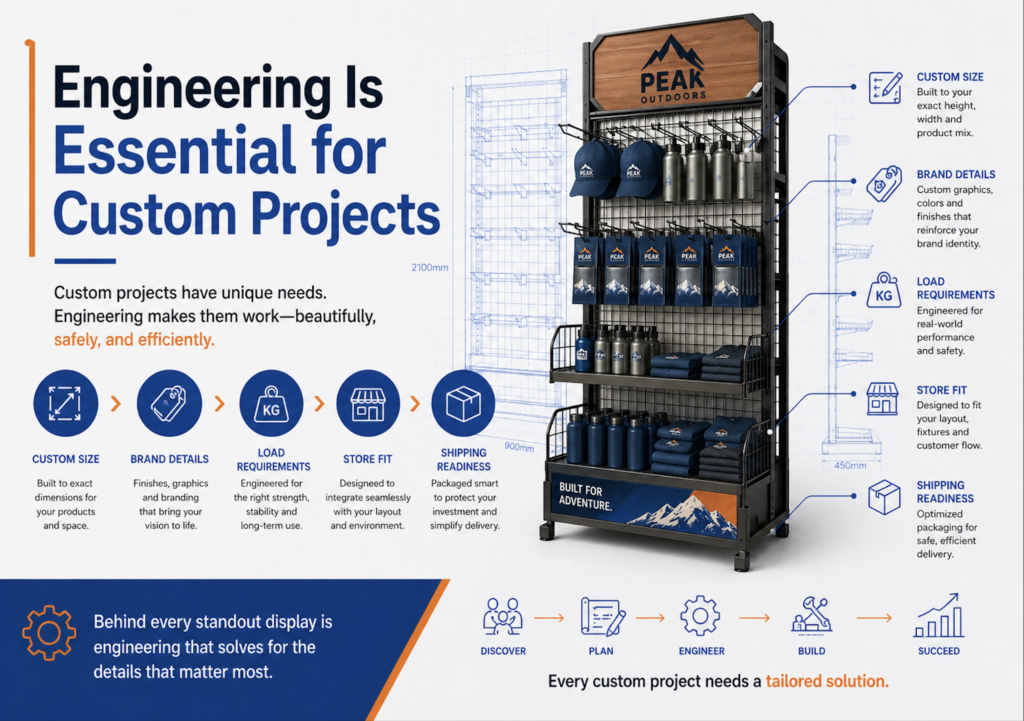
Engineering Is Especially Important for Custom Projects
Standard fixtures can sometimes follow standard solutions.
But custom retail fixtures are different.
They often require specific dimensions, unique branding details, product loading requirements, special finishes, store layout compatibility, and export packing considerations.
That is why engineering is a key part of successful retail display solutions.
For custom POP displays and store fixtures, the factory should not only follow drawings.
It should also review whether the design is practical for production, assembly, packing, and real store use.
Final Thought
A good display is not only attractive.
It also needs to be practical, durable, production-friendly, and shipping-ready.
That is why display engineering is not an extra step.
It is one of the foundations of successful custom display manufacturing.
When engineering is done well, the project becomes easier to control.
Better structure.
Better cost.
Better production.
Better packaging.
Better retail performance.
If you are developing a custom POP display, metal display rack, wire display, or store fixture project, Aldrich can support you with design review, display engineering, sample development, mass production, packaging, and shipment.
📧 Email: barry@arstorefixture.com
🌐 Website: https://www.aldrichshopfitting.com/