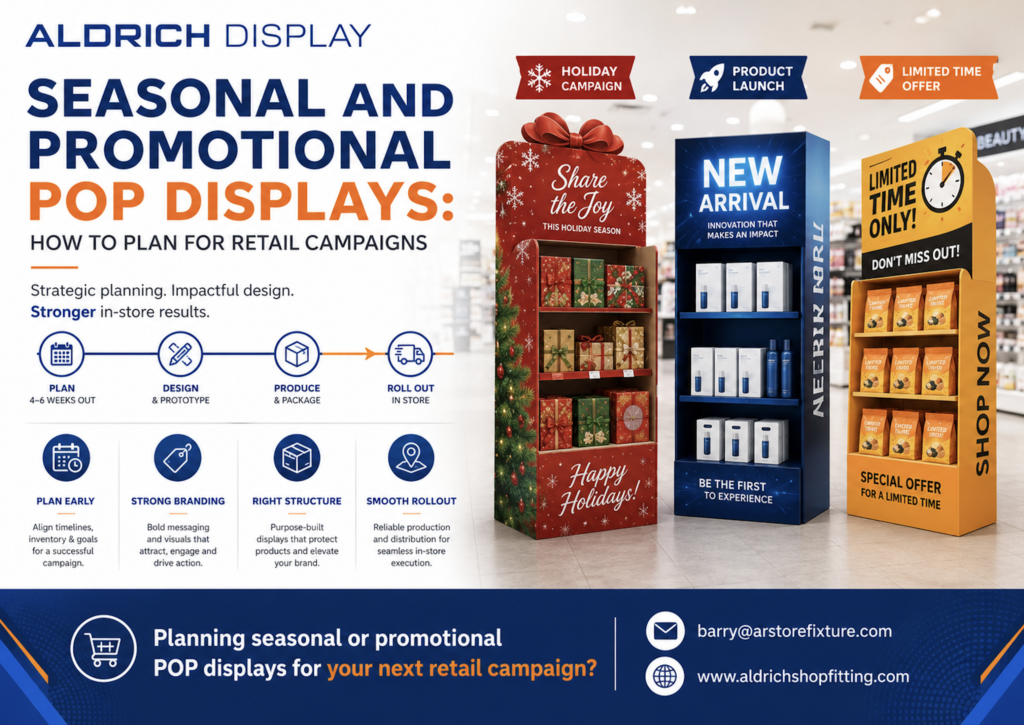
Seasonal retail campaigns move fast.
Brands often need displays for holidays, product launches, promotional events, or limited-time offers.
That is why seasonal and promotional POP displays need careful planning.
A display that arrives late may miss the whole campaign.
Start planning early
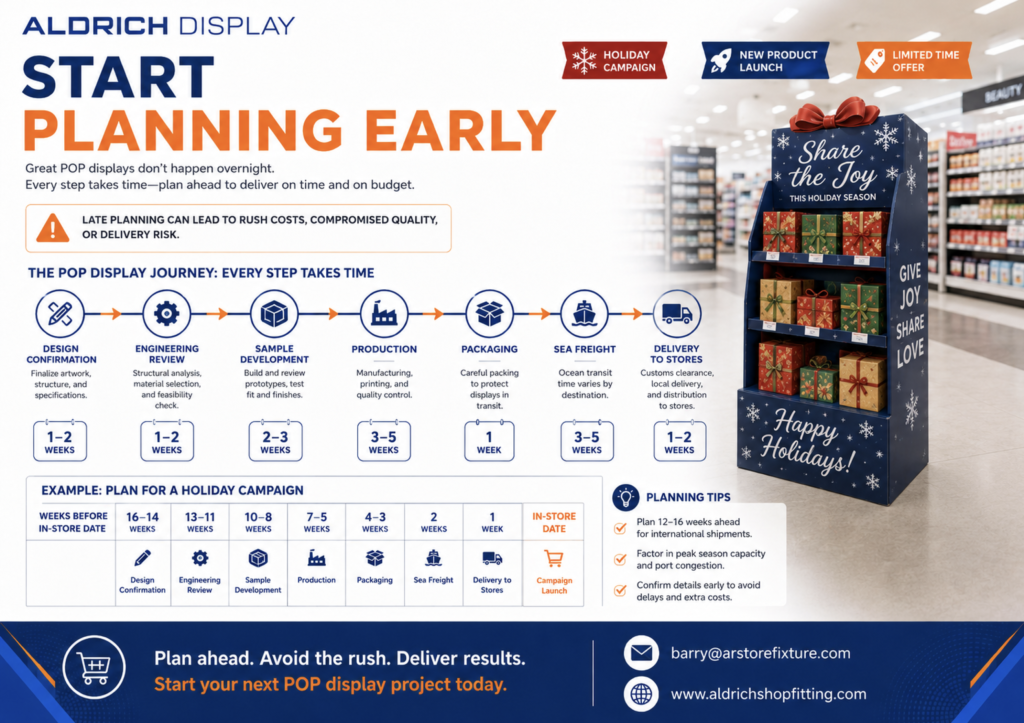
Timing is one of the most important factors.
A promotional display project may include:
- design confirmation
- engineering review
- sample development
- production
- packaging
- sea freight
- delivery to stores
Each step takes time.
If planning starts too late, the project may face rush costs or delivery risk.
Define the campaign goal
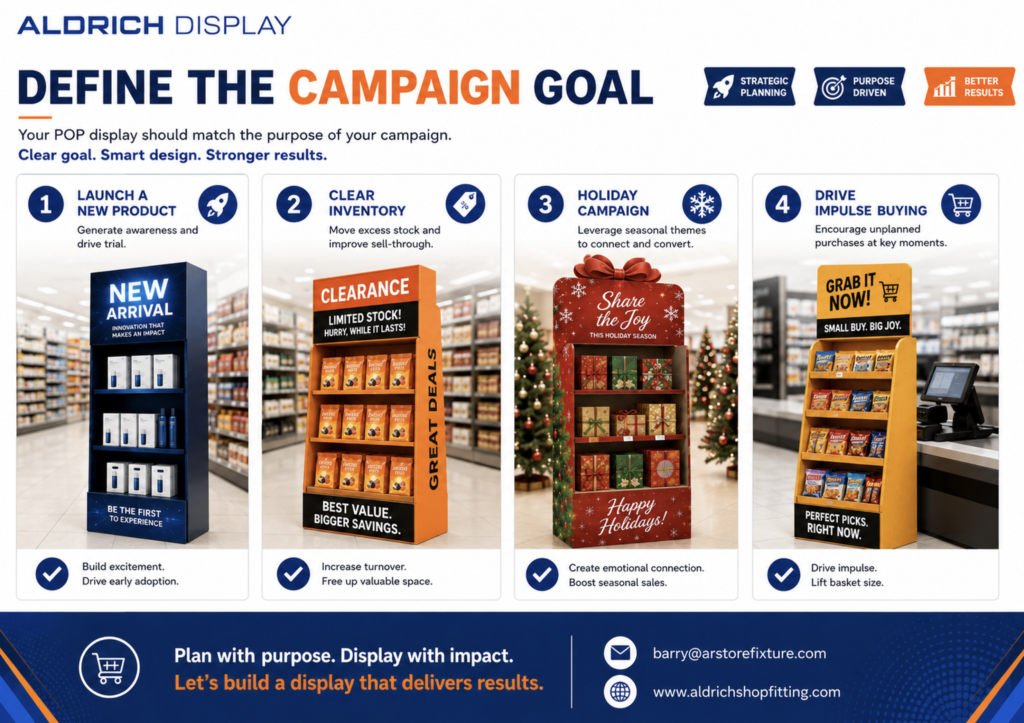
Not every promotional display has the same purpose.
Some displays are designed to launch a new product.
Some are used to clear inventory.
Some are built for holiday campaigns.
Some focus on impulse buying.
The structure should match the campaign goal.
Make branding strong but simple
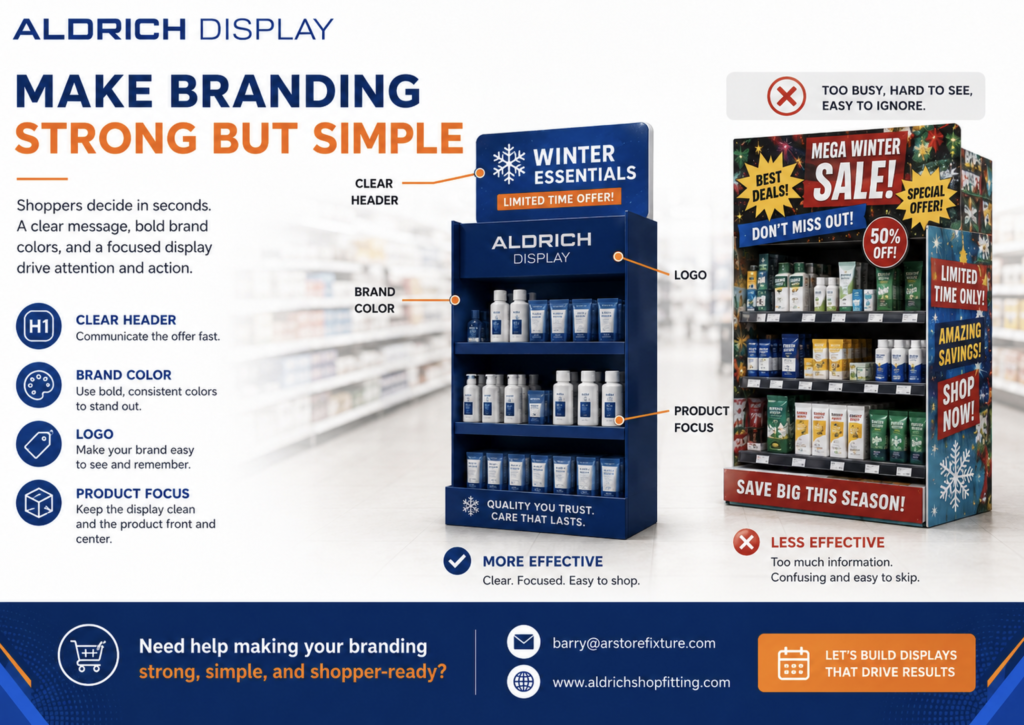
Promotional displays usually need strong visual impact.
But the message should be simple.
A clear header, brand color, logo, and product focus often work better than too much information.
Shoppers should understand the offer quickly.
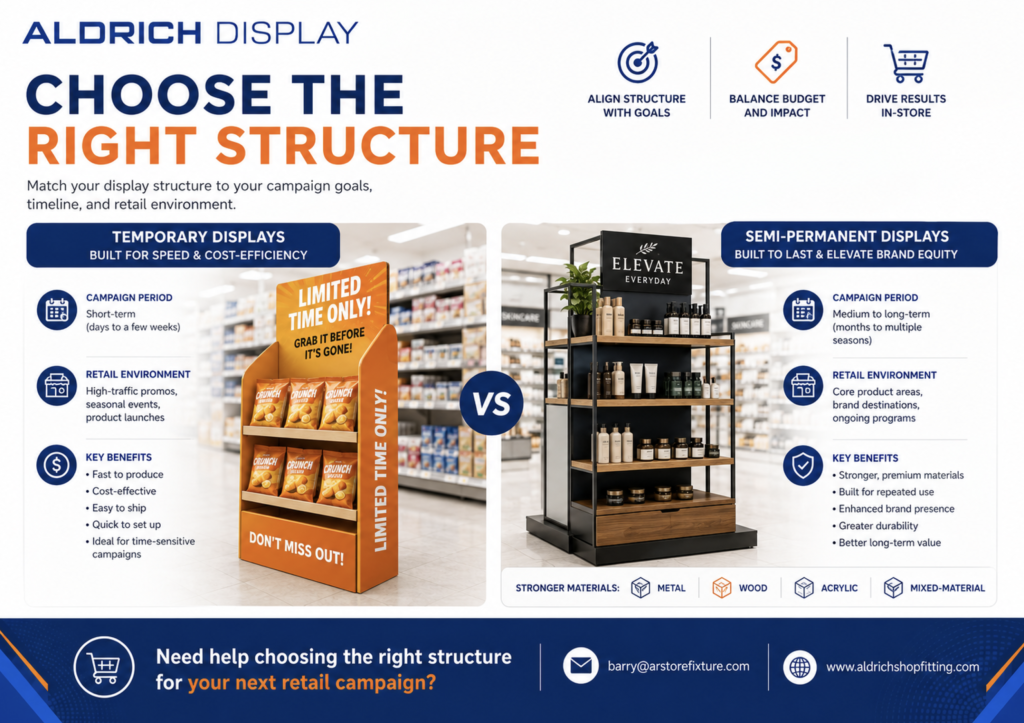
Choose the right structure
Seasonal displays can be temporary or semi-permanent.
Temporary displays may focus more on speed and cost.
Semi-permanent displays may need stronger materials such as metal, wood, acrylic, or mixed-material construction.
The choice depends on the campaign period and retail environment.
Consider store rollout needs
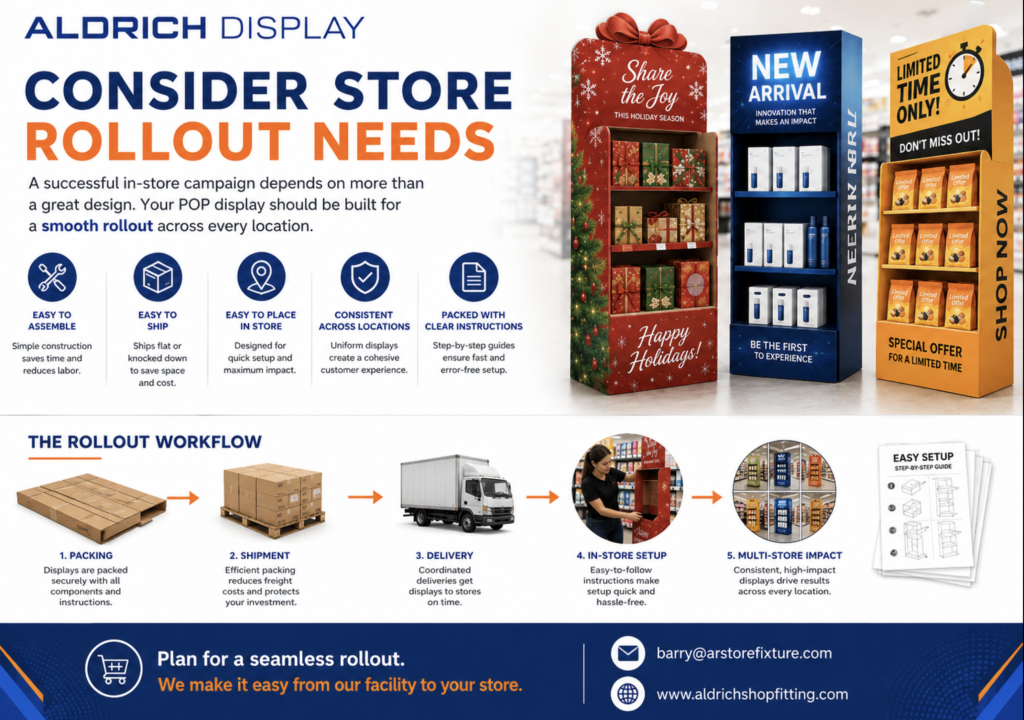
For multi-store campaigns, consistency matters.
The display should be:
- easy to assemble
- easy to ship
- easy to place in store
- consistent across locations
- packed with clear instructions
This helps retailers execute the campaign smoothly.
Final thought
Seasonal and promotional POP displays can create strong retail impact.
But success depends on timing, planning, design, production, and logistics.
The earlier the project is prepared, the better the chance of successful retail execution.