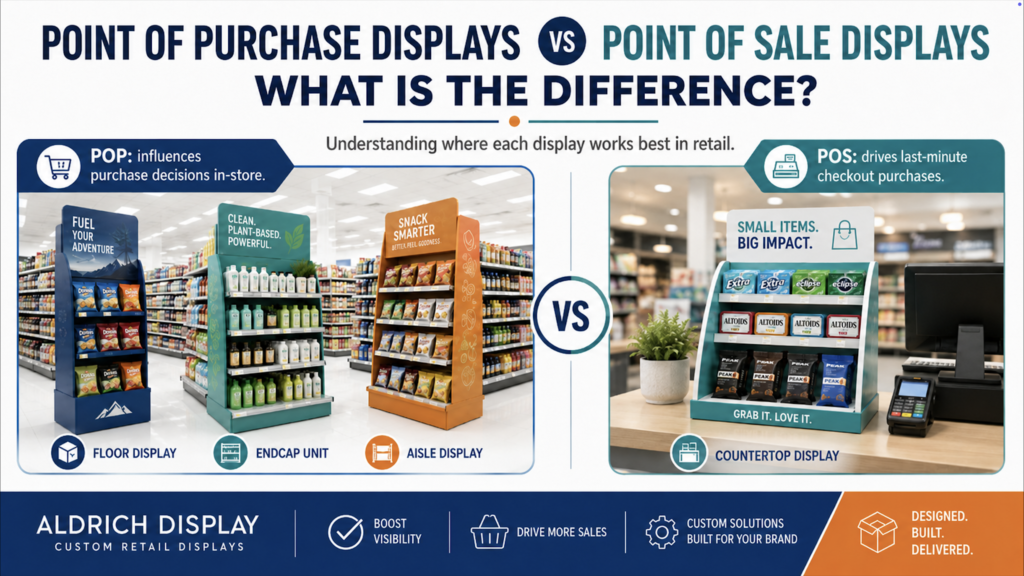
In retail, two terms are often used in similar ways:
Point of Purchase Displays
and
Point of Sale Displays
They sound close.
And in some conversations, people use them interchangeably.
But there is still a practical difference between them.
Understanding that difference helps brands choose the right display strategy.
What are Point of Purchase Displays?
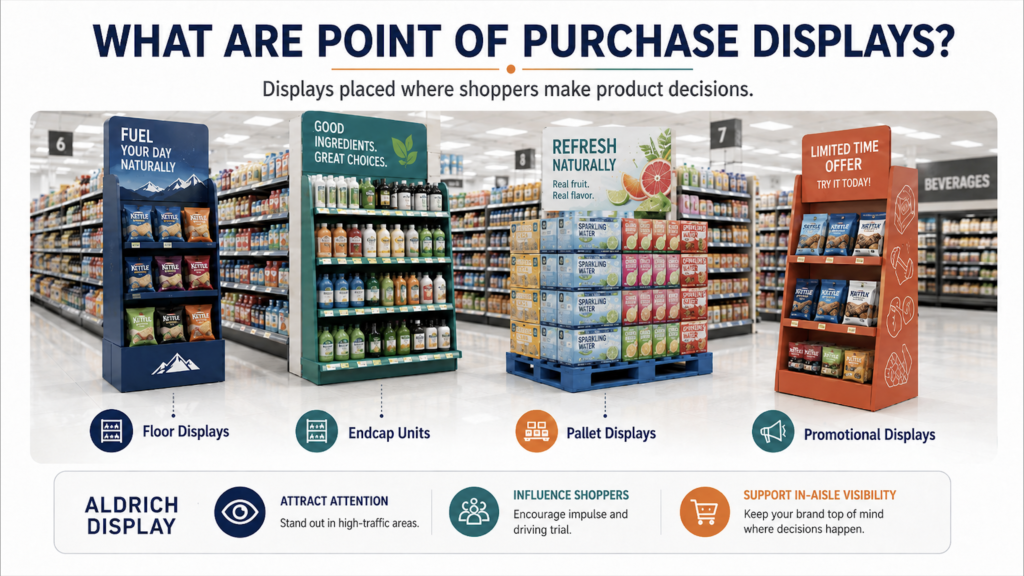
Point of Purchase Displays, often called POP Displays, are placed in areas where shoppers make product decisions.
These displays are designed to attract attention and influence buying behavior.
Common examples include:
- floor displays
- aisle displays
- endcap units
- pallet displays
- temporary promotional displays
Their main goal is to encourage the customer to notice the product before checkout.
What are Point of Sale Displays?
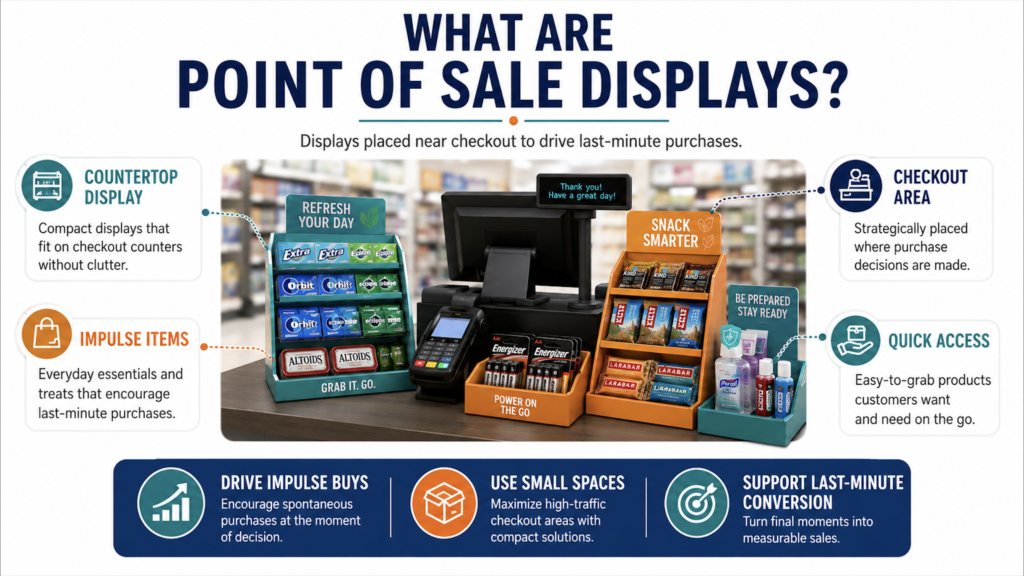
Point of Sale Displays, often called POS Displays, are usually placed near the checkout or payment area.
These displays are often used for:
- impulse-buy products
- small accessories
- limited-time promotions
- convenience items
Their purpose is to trigger last-minute purchase decisions.
Why the difference matters
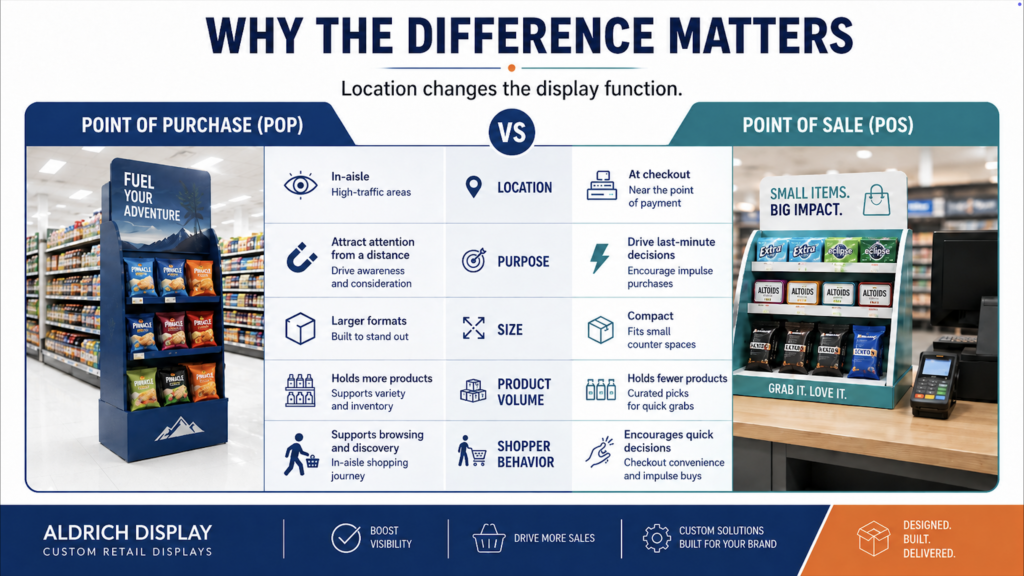
The location affects the display function.
A POP display usually needs to:
- attract attention from a distance
- hold more products
- communicate branding clearly
- support in-aisle shopping
A POS display usually needs to:
- fit smaller spaces
- support quick product access
- encourage impulse purchases
- work near the cashier or checkout counter
That means the structure, size, and merchandising logic may be different.
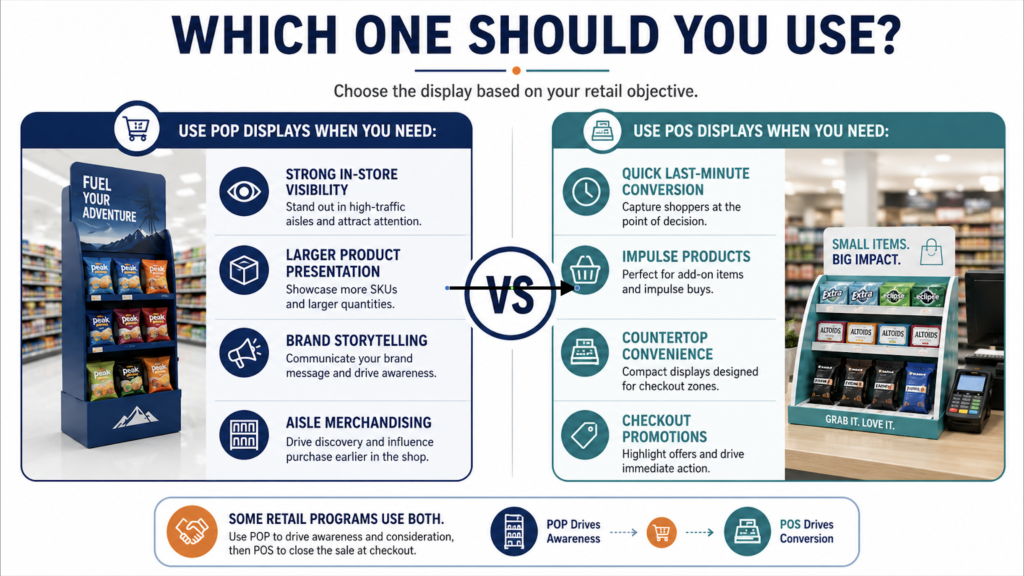
Which one should you use?
The answer depends on the retail objective.
Use POP displays when the goal is strong in-store visibility and larger product presentation.
Use POS displays when the goal is quick last-minute conversion near checkout.
In some retail programs, both are used together.
Final thought
POP and POS displays are related,
but they are not exactly the same.
The best retail programs understand where each one works best and how each supports product movement in different parts of the store.