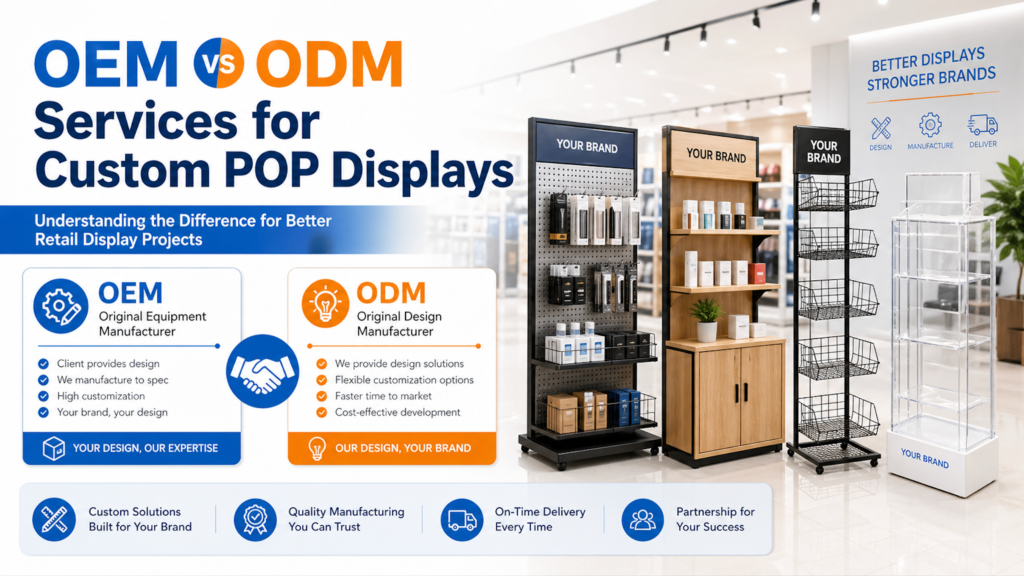
When buyers look for a supplier for custom POP displays, they often see two common terms:
OEM and ODM.
These terms are widely used in custom display manufacturing, but many buyers are not always clear about what they mean in real projects.
Understanding the difference is important because it can affect product development, engineering support, cost control, timing, and communication.
For custom retail display projects, choosing the right model can help buyers work more efficiently with the manufacturer from the beginning.
What Is OEM?
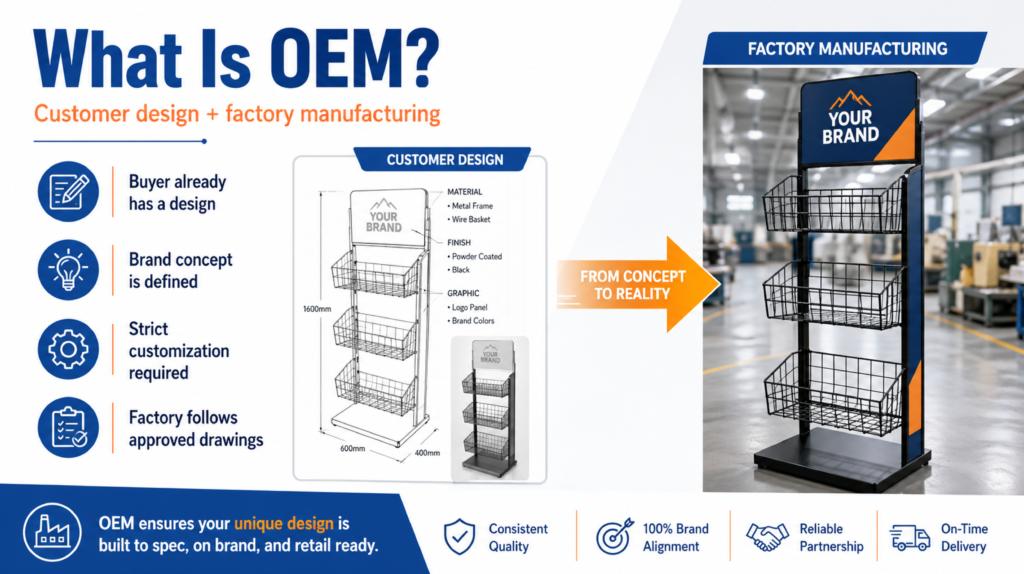
OEM means Original Equipment Manufacturing.
In custom POP display projects, OEM usually means the buyer already has a concept, drawing, rendering, or technical requirement, and the factory manufactures the display according to that direction.
This model is common when:
- the buyer already has a design team
- the brand has a fixed retail display concept
- the structure and branding style are already defined
- the project requires strict customization
- the buyer needs the factory to follow approved drawings and specifications
OEM is a good fit for brands that want strong control over design, structure, materials, and project details.
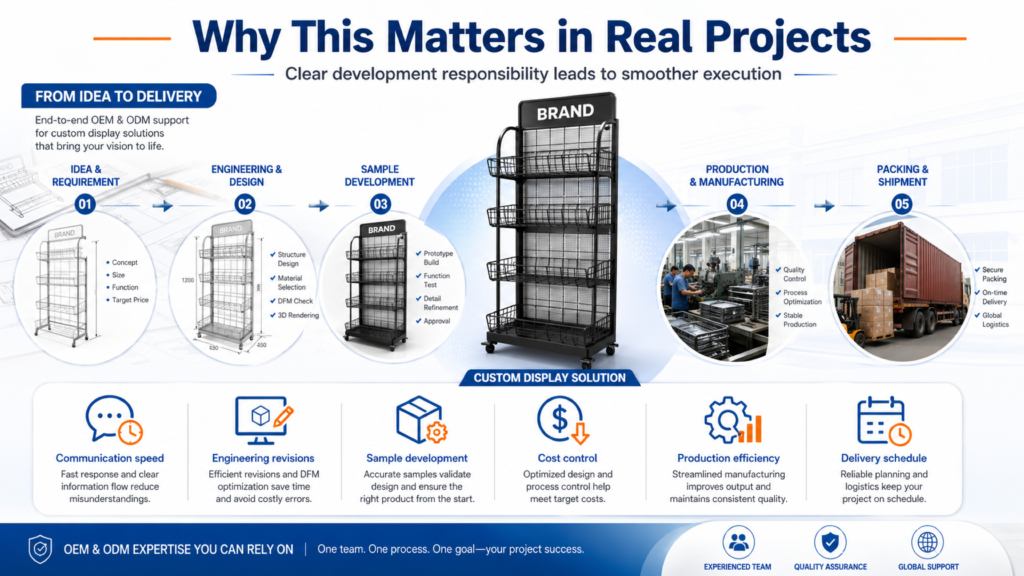
In this model, the factory’s role is mainly to turn the customer’s approved idea into a real product through engineering, sampling, mass production, quality control, packaging, and shipment.
What Is ODM?
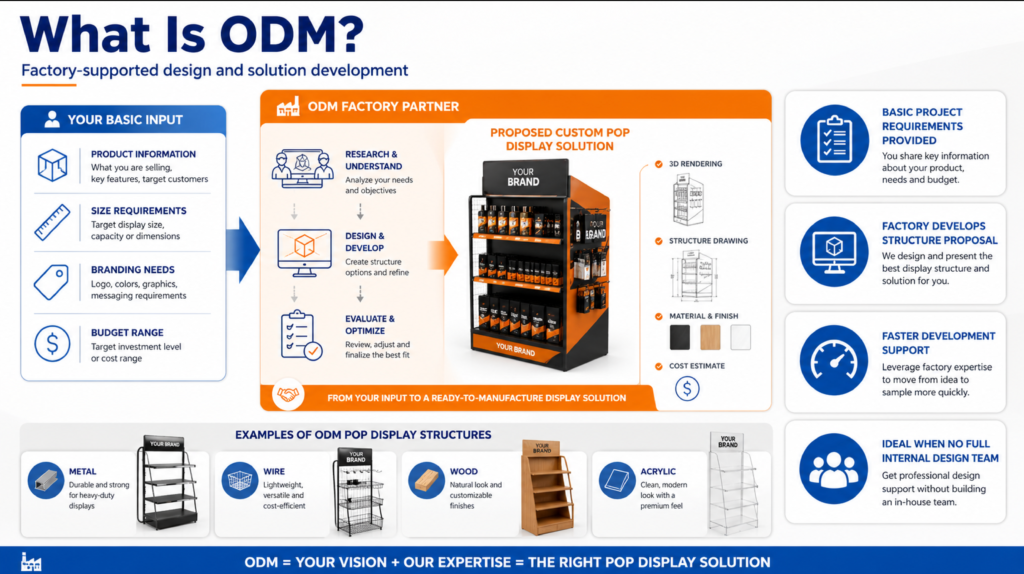
ODM means Original Design Manufacturing.
In custom display manufacturing, ODM means the manufacturer provides more support in the design direction, structure proposal, or product solution based on the customer’s needs.
In many cases, the buyer may only provide basic information such as:
- product size and weight
- display size target
- target quantity
- branding needs
- budget direction
- store environment reference
- product images or reference displays
Then the factory helps develop a practical display solution.
ODM is helpful when the buyer wants faster development or does not have a complete internal design or engineering team.
In this model, the manufacturer is more involved in turning the buyer’s idea into a workable display structure.
Which One Is Better for Custom POP Displays?
There is no single answer.
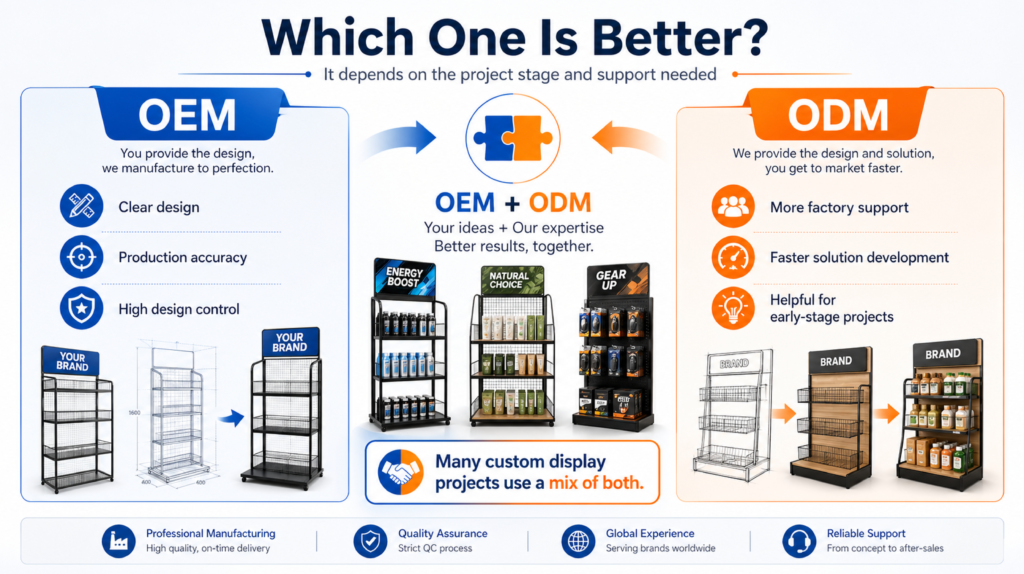
OEM is better when the customer already has a clear design and needs accurate production according to approved specifications.
ODM is better when the buyer needs more factory support in product development, structure design, material selection, or cost optimization.
For many retail display and store fixture projects, the actual process is often a combination of both.
A customer may send an idea, reference image, or rough drawing, and the manufacturer may help optimize it for:
- structure stability
- material usage
- production efficiency
- cost control
- assembly method
- export packing
- shipping efficiency
That is why many custom POP display projects are not purely OEM or purely ODM.
They are often a practical mix of customer direction and factory engineering support.
Why OEM and ODM Matter in Real Display Projects
In POP displays, store fixtures, and shopfitting projects, small differences in development responsibility can affect the full project.
This includes:
- communication speed
- engineering revisions
- sample development
- cost control
- production efficiency
- quality consistency
- final delivery schedule
If the buyer expects OEM production but has not provided complete drawings, the quotation may not be accurate.
If the buyer needs ODM support but only asks for a simple price, the factory may not have enough information to suggest the best solution.
That is why it is important to clarify the development model early.
The more clearly the OEM or ODM model is defined, the smoother the project usually becomes.
Final Thought
OEM and ODM are not just labels.
They describe how the project will be developed and who takes responsibility for different parts of the process.
For custom POP display projects, understanding this difference early helps reduce confusion, improve communication, and create better results.
If you already have a finished drawing, OEM production may be the right choice.
If you only have an idea, product requirement, or retail display goal, ODM support may help you develop the solution faster.
In the end, the best model is the one that fits your project stage, your internal resources, and your retail display needs.
If you are developing a custom POP display or store fixture project, Aldrich can support both OEM and ODM requirements from design review and engineering to sampling, mass production, packaging, and shipment.
📧 Email: barry@arstorefixture.com
🌐 Website: https://www.aldrichshopfitting.com/