Retail changes quickly.
Products change.
Promotions change.
Store layouts change.
That is why many brands and retailers are interested in modular retail displays.
A modular display is designed with flexibility in mind.
Instead of one fixed structure, it can be adjusted, expanded, or reconfigured for different merchandising needs.
What is a modular retail display?
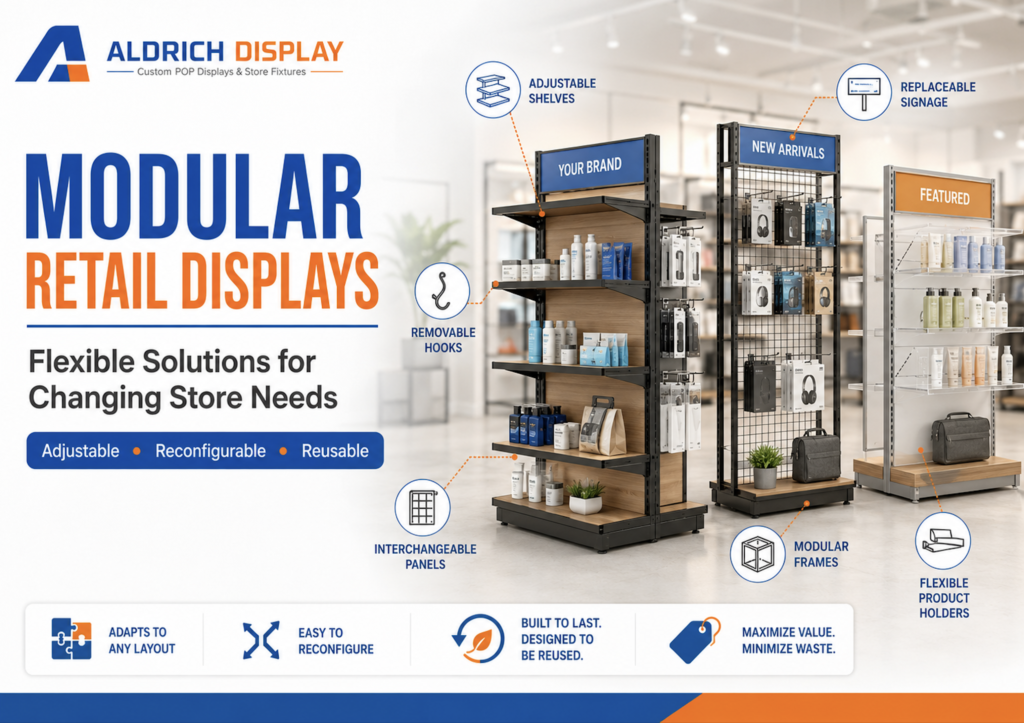
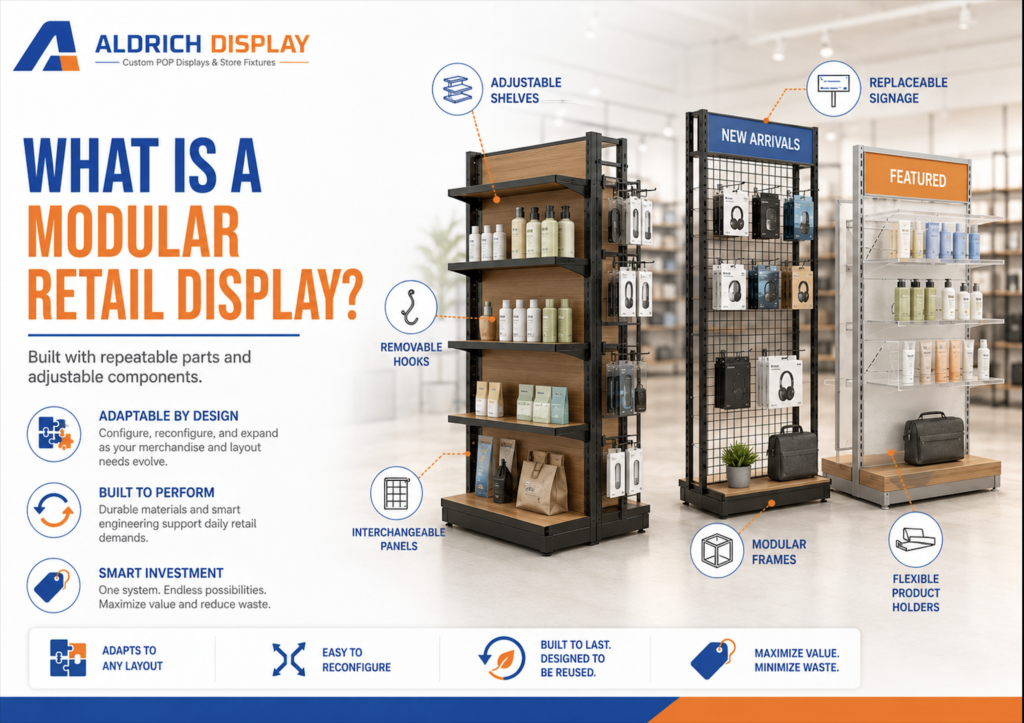
A modular retail display uses repeatable parts or adjustable components.
It may include:
- adjustable shelves
- removable hooks
- interchangeable panels
- modular frames
- replaceable signage
- flexible product holders
This makes the display useful for different products or campaigns.
Why modular displays are useful
The biggest advantage is flexibility.
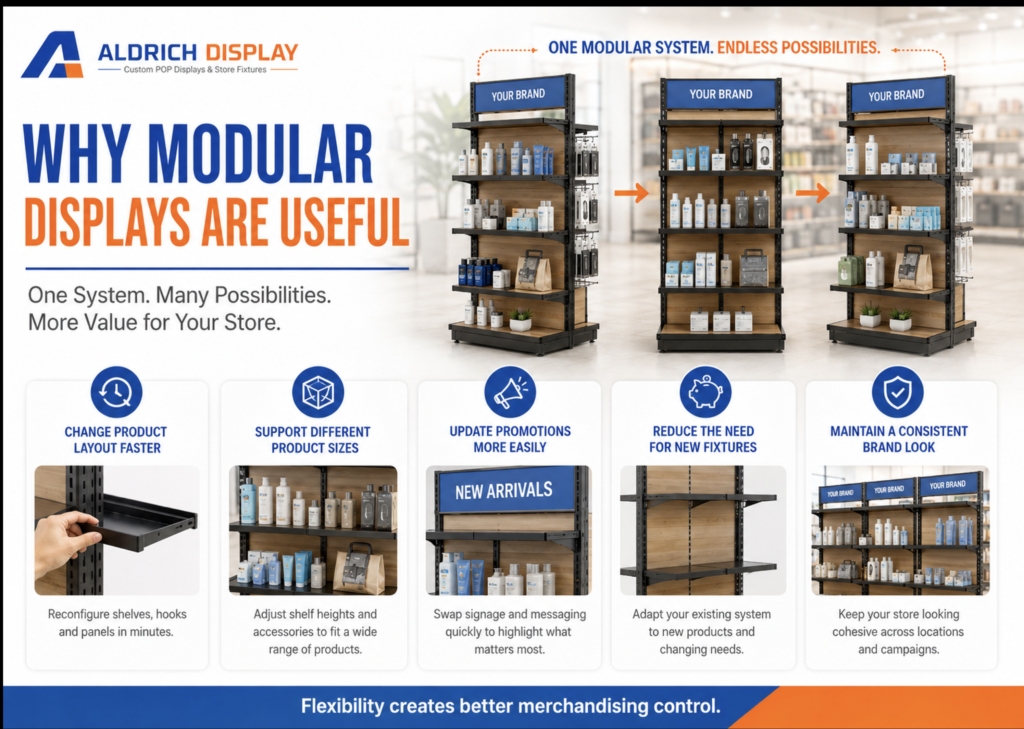
A modular display can help stores:
- change product layout faster
- support different product sizes
- update promotions more easily
- reduce the need for new fixtures
- maintain a consistent brand look
This is especially helpful for retailers with frequent seasonal or promotional changes.
Modular design can reduce long-term cost
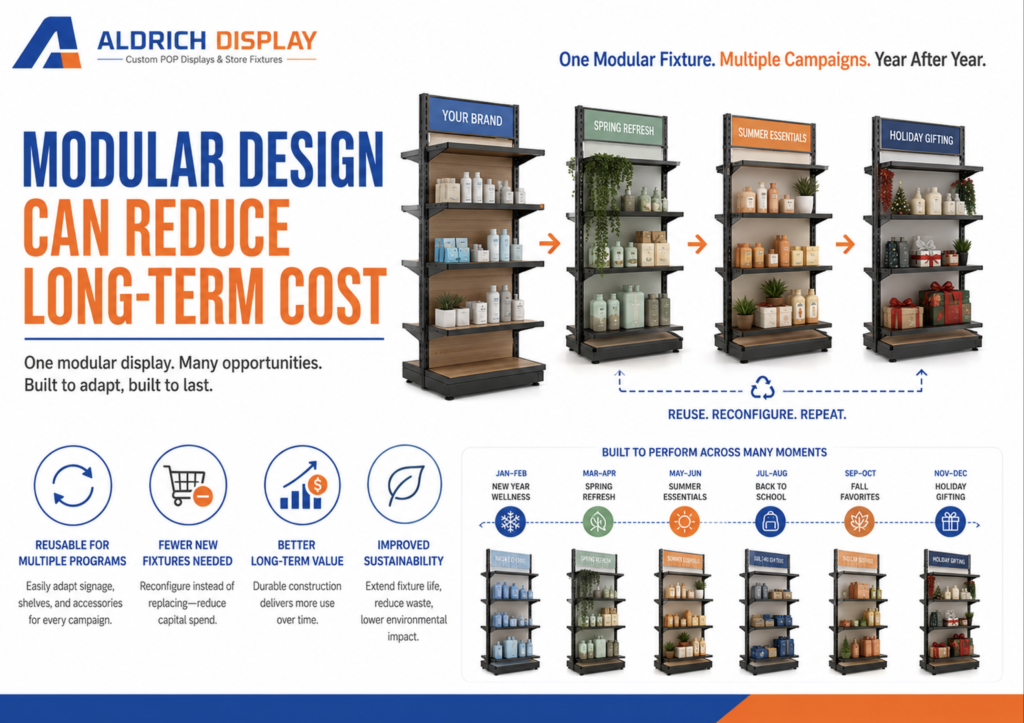
A fixed display may work for one campaign only.
But a modular display may be reused for multiple programs.
This can reduce the long-term cost of store fixture investment.
It also helps improve sustainability because fewer fixtures need to be replaced.
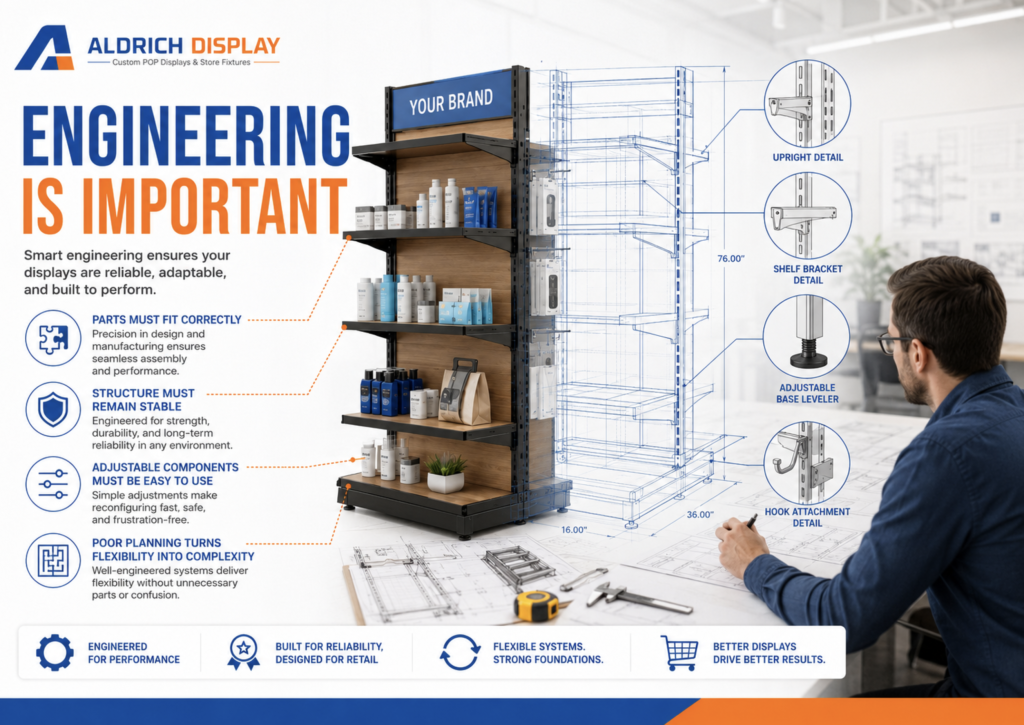
Engineering is important
Modular displays may look simple, but the engineering needs to be accurate.
The parts must fit correctly.
The structure must remain stable.
The adjustable components must be easy to use.
If the design is not well planned, flexibility can become complexity.
Best uses for modular retail displays
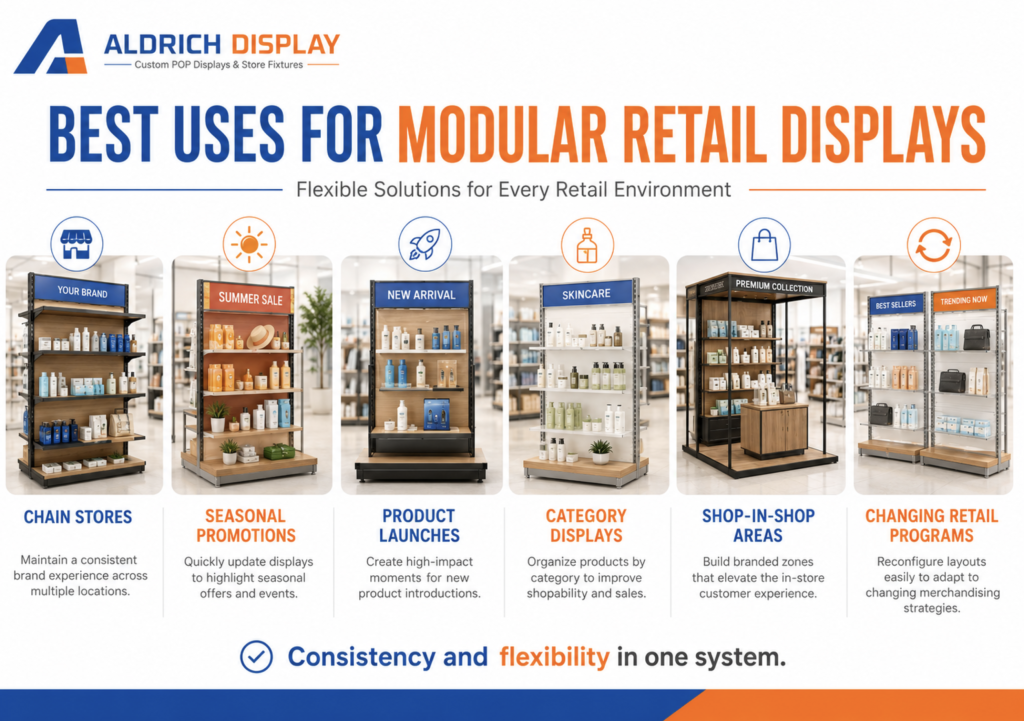
Modular displays are useful for:
- chain stores
- seasonal promotions
- product launches
- category displays
- shop-in-shop areas
- changing retail programs
They are especially suitable when the retailer wants both consistency and flexibility.
Final thought
Modular retail displays help brands and retailers adapt to changing needs.
They provide flexibility, better long-term value, and stronger merchandising control.
For many modern retail environments, modular design is a practical solution.