A custom retail display can be a powerful sales tool.
It can help products stand out, improve store presentation, and support brand visibility.
But only when the project is developed the right way.
In many cases, the biggest problems do not happen in the store.
They happen much earlier, during custom display development, engineering, sampling, packaging, and production planning.
That is why avoiding common mistakes early can make a big difference to the final result.
Here are some of the most common mistakes buyers should avoid when developing a custom retail display.
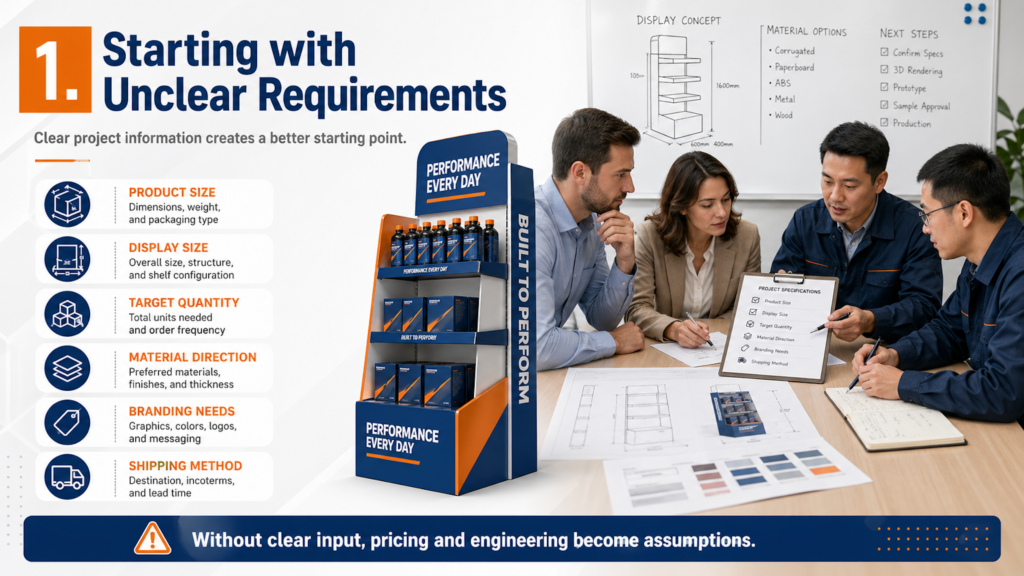
1. Starting with Unclear Requirements
If a custom display project begins with incomplete information, everything becomes more difficult later.
Before asking for a quotation, buyers should at least prepare:
- product size
- display size
- target quantity
- material direction
- branding needs
- shipping method
Without this information, pricing and engineering can only be based on assumptions.
Clear requirements create a better starting point for quotation, design, engineering review, and production planning.
2. Focusing Only on Unit Price
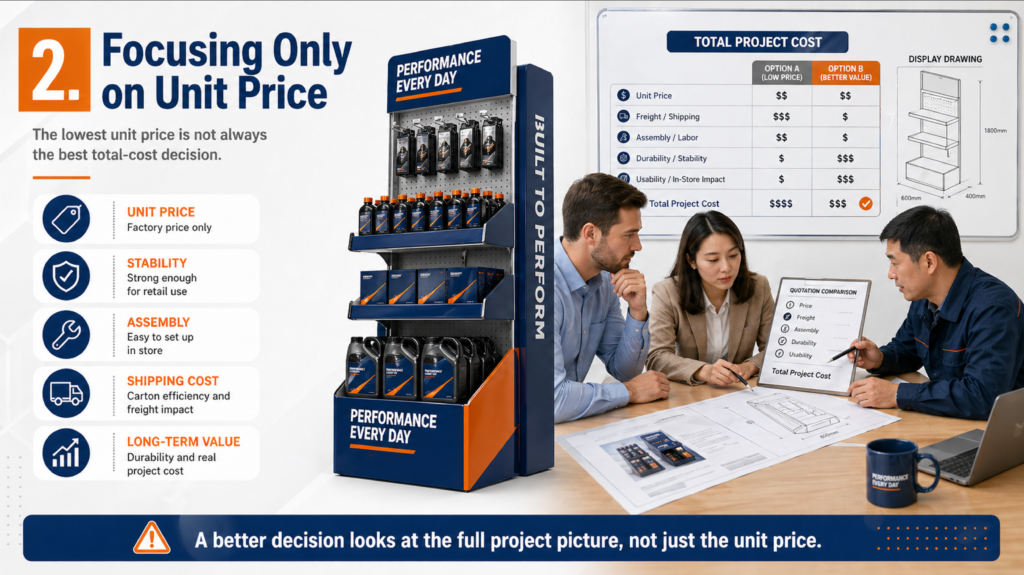
A low unit price may look attractive at first.
But if the display is unstable, difficult to assemble, or expensive to ship, the total project cost may become much higher.
A better decision should look at the full picture, including:
- product function
- structural stability
- assembly efficiency
- packaging method
- shipping cost
- long-term usability
The cheapest display is not always the most cost-effective display.
For custom POP displays and store fixtures, total value is more important than unit price alone.
3. Ignoring Shipping During the Design Stage
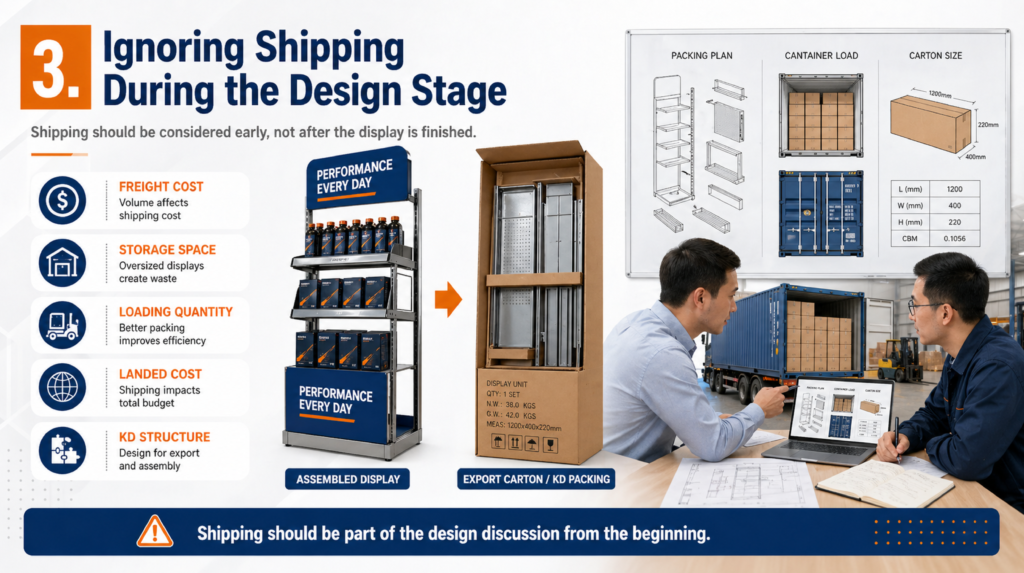
This is one of the most common mistakes in POP display development.
A display may work well structurally, but still be too large or inefficient for export packing.
That affects:
- freight cost
- storage space
- loading quantity
- landed cost
Shipping should be part of the design discussion from the beginning, not only after the display is finished.
An experienced retail display manufacturer will usually consider packing efficiency, carton size, KD structure, and container loading early in the development process.
4. Skipping the Sample Stage
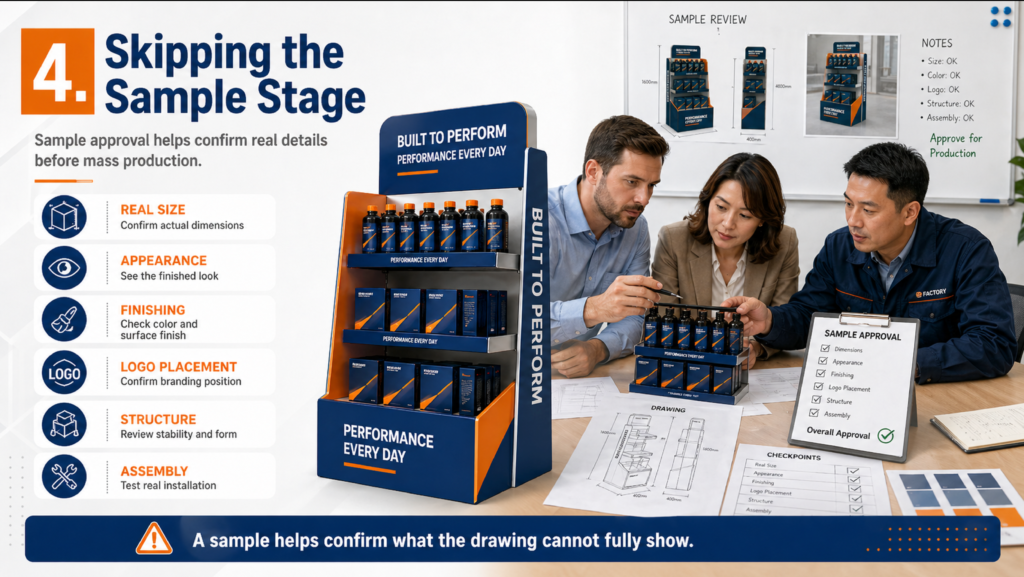
Skipping the sample stage may seem like a way to save time.
But in many cases, it creates more risk later.
A sample helps confirm what a drawing cannot fully show, such as:
- real size
- actual appearance
- finishing quality
- logo placement
- structure
- assembly method
Sample approval is one of the best ways to reduce production mistakes before bulk production begins.
For custom retail display projects, a sample is not just a formality.
It is an important checkpoint before mass production.
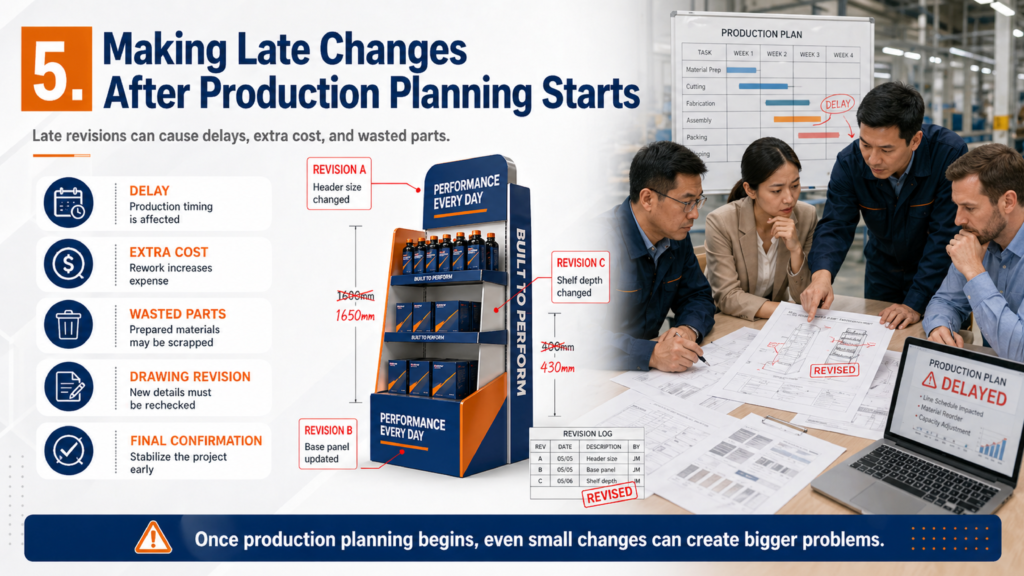
5. Making Late Changes After Production Planning Starts
Changes often look small on paper.
But once material has been prepared or production has already been arranged, even a simple revision can create delay, extra cost, or wasted parts.
That is why final drawing confirmation is so important.
The earlier the project is stabilized, the easier it is to control cost, timeline, and production efficiency.
Late changes can affect raw material use, tooling, welding, finishing, packaging, and delivery schedule.
6. Treating Packaging as an Afterthought
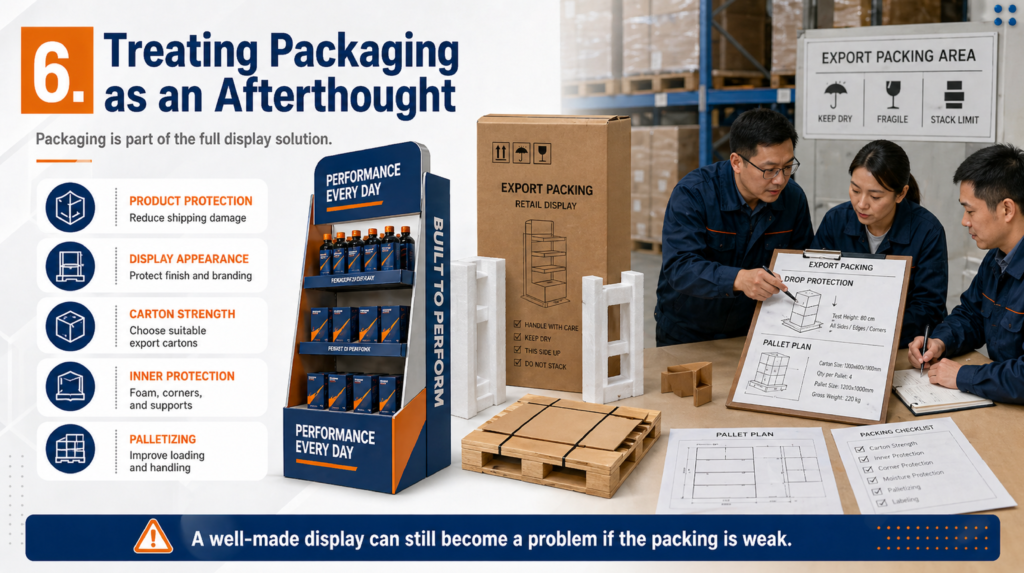
Packaging is not separate from the product.
It is part of the full custom display solution.
If the packing is weak, even a well-made display may still arrive damaged.
Good display packaging helps protect:
- product quality
- display appearance
- shipping safety
- customer experience
That is why packaging should be reviewed early, especially for export projects.
For international shipments, carton strength, inner protection, palletizing, and loading method all matter.
7. Not Choosing the Right Factory Partner
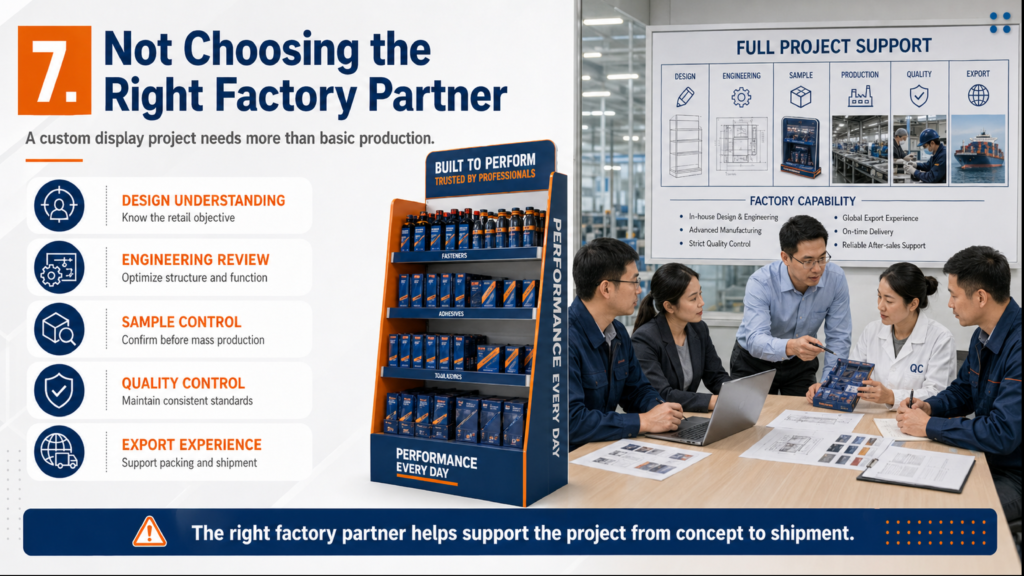
A custom retail display project needs more than basic production.
It also requires:
- design understanding
- engineering review
- sample control
- quality control
- export experience
Choosing the right supplier can have a major impact on how smoothly the whole project runs.
A reliable custom display manufacturer should not only manufacture the display, but also help support the project from concept to shipment.
The right factory partner can help buyers reduce mistakes, improve efficiency, and avoid unnecessary cost.
Final Thought
The best custom retail display projects are usually not the most complicated ones.
They are the ones that stay clear, practical, and well managed from the beginning.
Avoiding common mistakes is often the fastest way to get a better result.
When requirements are clear, samples are confirmed, packaging is planned, and communication stays organized, cost, quality, and delivery become much easier to control.
For buyers developing custom POP displays, store fixtures, or retail display solutions, the right process matters as much as the right product.
If you are developing a custom retail display project, feel free to contact Aldrich for quotation and technical discussion.
📧 Email: barry@arstorefixture.com
🌐 Website: aldrichshopfitting.com